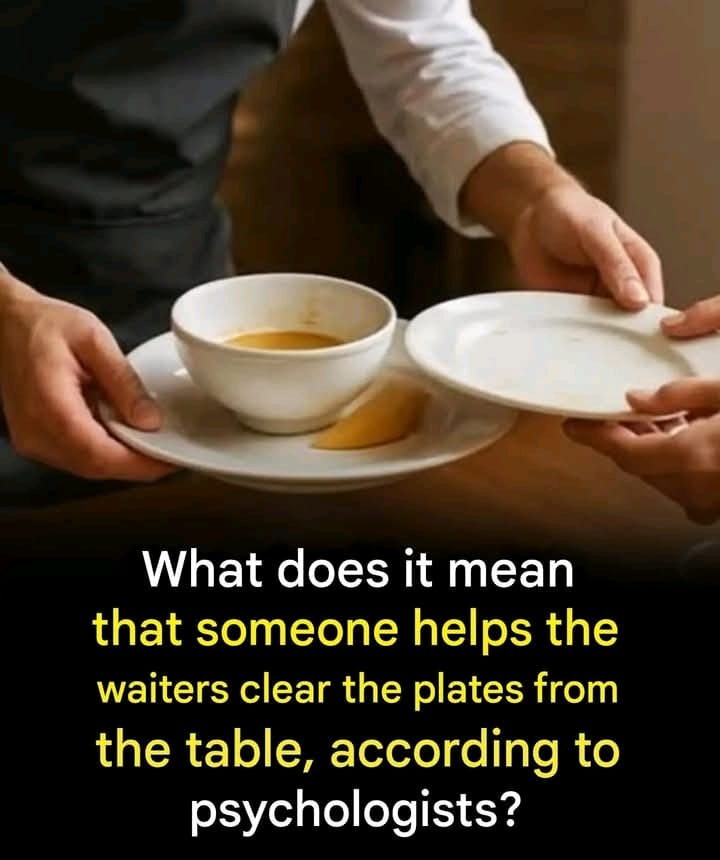
When someone helps a waiter clear the table, psychologists often see it as a small behavior that reveals bigger personality traits and social tendencies.
Here’s what it can signal:
1. Prosocial Behavior
Helping without being asked reflects prosocial behavior — voluntary actions intended to benefit others. Research in social psychology links this to:
- Higher empathy
- Stronger moral identity
- Greater emotional intelligence
People who naturally notice opportunities to help tend to be more attuned to others’ needs.
2. Empathy & Perspective-Taking
According to studies influenced by researchers like Daniel Batson, helping behavior is strongly connected to empathic concern.
If someone helps a waiter, it may indicate:
- They can easily imagine the worker’s workload
- They feel a small emotional response to seeing someone busy
- They’re motivated to reduce another person’s effort
3. Low Entitlement
Social psychologists often associate small cooperative gestures with low entitlement levels.
People who expect to be “served” tend not to assist. Helping suggests:
- They don’t strongly believe certain tasks are “beneath them”
- They view service workers as equals rather than subordinates
4. High Agreeableness (Big Five Trait)
In the Big Five personality model (popularized by researchers like Paul Costa and Robert McCrae), helping behaviors often correlate with agreeableness, which includes:
- Kindness
- Cooperation
- Consideration
- Politeness
Small acts like stacking plates are common among people high in this trait.
5. Internalized Social Norms
Some people help not purely from empathy, but because they were raised with norms such as:
- “Leave things better than you found them.”
- “Don’t make others’ jobs harder.”
This reflects strong internalization of cooperative cultural values.
6. Self-Image & Identity Signaling
Psychologists also note that behavior can reinforce self-identity:
- “I’m the kind of person who helps.”
- “I respect workers.”
Sometimes the act is automatic. Other times it subtly reinforces how someone wants to see themselves.
7. Secure Social Status
Interestingly, research suggests people who feel secure in their social standing are more comfortable doing small service-related tasks. Those who feel status anxiety may avoid behaviors that feel “servant-like.”
Important Caveat
One behavior doesn’t define a person.
Context matters:
- They might have worked in hospitality before.
- They might just want to leave faster.
- They might be copying someone else at the table.
Psychologists look for patterns over time, not isolated gestures.
If you’d like, I can also explain what it might signal in dating contexts or leadership settings — the interpretation shifts depending on the situation.
