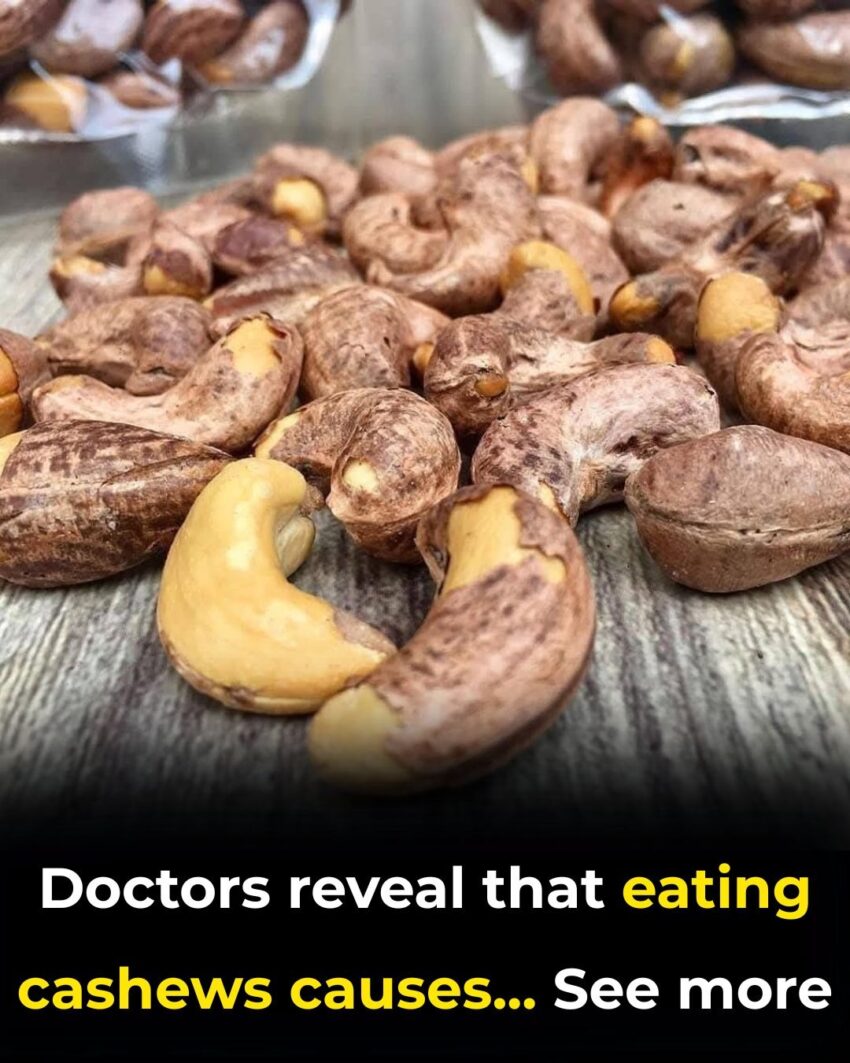
Claims like “Doctors reveal that eating cashews causes…” are often clickbait. The truth is more balanced.
🌰 What Eating Cashews Actually Does
Cashews are generally healthy for most people. They are rich in:
- Healthy fats (mostly monounsaturated)
- Magnesium
- Copper
- Plant protein
- Antioxidants
Studies link regular nut consumption to better heart health and lower risk of certain chronic diseases.
⚠️ When Cashews Can Cause Problems
1️⃣ Allergic Reactions
Cashews are a tree nut and can cause serious allergic reactions in some people, including anaphylaxis. If someone has a known tree-nut allergy, they should avoid them.
2️⃣ Weight Gain (If Overeaten)
Cashews are calorie-dense. Eating large amounts regularly can contribute to weight gain.
3️⃣ Kidney Stone Risk (In Susceptible People)
Cashews contain oxalates. People prone to calcium oxalate kidney stones may need to limit high-oxalate foods.
4️⃣ Digestive Upset
Eating a large quantity at once can cause bloating or stomach discomfort.
5️⃣ Raw Cashew Confusion
True raw cashews contain urushiol (the same irritant found in poison ivy), but commercially sold “raw” cashews are actually steamed to remove it, so they’re safe.
❌ What Cashews Do Not Automatically Cause
- They do not cause diabetes.
- They do not cause high cholesterol (they may actually help improve it).
- They do not “toxify” your body.
Bottom Line
For most people, cashews are a healthy snack when eaten in moderation. Problems mainly occur with allergies or excessive intake.
If you saw a specific claim (like “cashews cause liver damage” or something else), tell me what it said and I’ll break it down for you.
