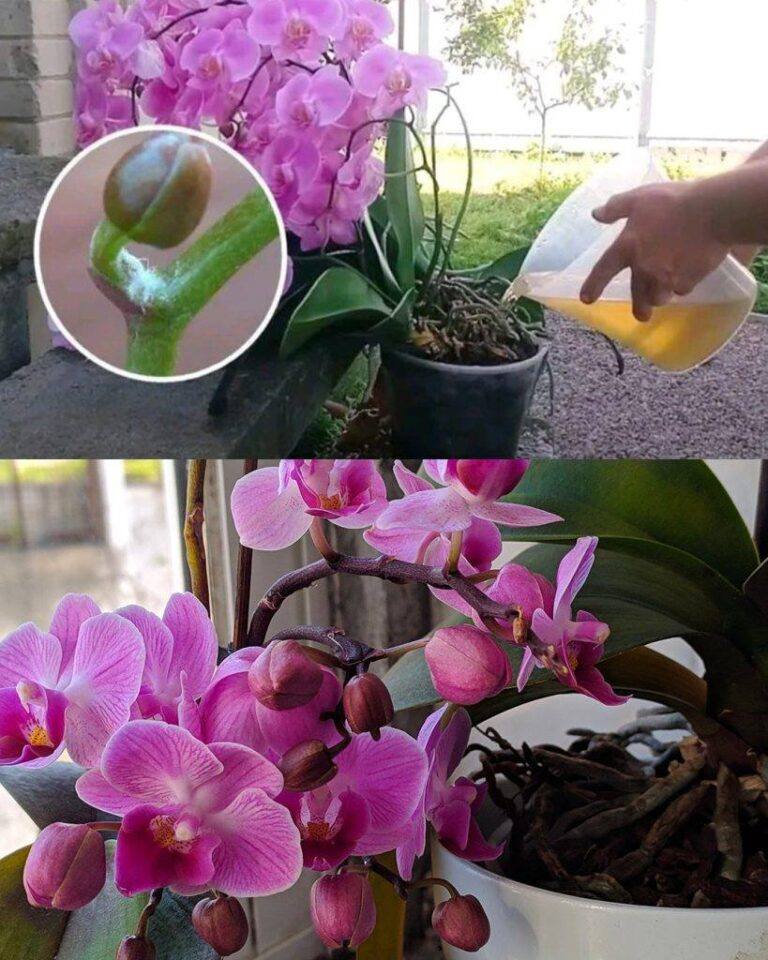
That sounds like another “miracle orchid hack.”
There is no single teaspoon of anything you can pour into an orchid pot that will guarantee continuous blooming, prevent mold, and stop all disease.
If that were true, professional orchid growers would universally use it.
Most home orchids are Phalaenopsis, so I’ll explain based on that type.
🥄 What Are These “1 Teaspoon” Claims Usually About?
Common ones include:
- Cinnamon powder
- Baking soda
- Sugar
- Rice
- Coffee grounds
- Garlic powder
- Epsom salt
⚠️ The reality:
Putting dry powders directly into orchid bark can:
- Burn roots
- Change pH
- Attract fungus gnats
- Cause mold (ironically)
- Damage delicate root tissue
Orchids are not like garden plants — they grow in airy bark, not soil.
🌸 Why Orchids Don’t Bloom Continuously
For Phalaenopsis:
- Bloom cycle usually lasts 1–3 months
- They rest, grow leaves and roots
- Then bloom again
Continuous nonstop flowering is unnatural and often stresses the plant.
More leaves without flowers usually means:
- Not enough light
- Too much nitrogen
- No nighttime temperature drop
🦠 About “No Mold, No Disease”
The real prevention methods are:
- Proper airflow
- Good drainage
- Letting bark dry slightly between waterings
- Using fresh orchid bark every 1–2 years
- Avoiding water sitting in the crown
Not kitchen powders.
✅ What Actually Encourages More Frequent Blooms
- Bright indirect light (very important)
- Slight night temperature drop (about 5–8°C difference)
- Balanced orchid fertilizer at ¼ strength
- Healthy roots (firm, green/silver)
- Proper watering routine
That’s the real formula.
If you tell me what the “1 teaspoon” ingredient was, I can explain exactly:
- Whether it’s safe
- Whether it helps at all
- And what it really does to orchid roots
No hype — just plant science 🌿
