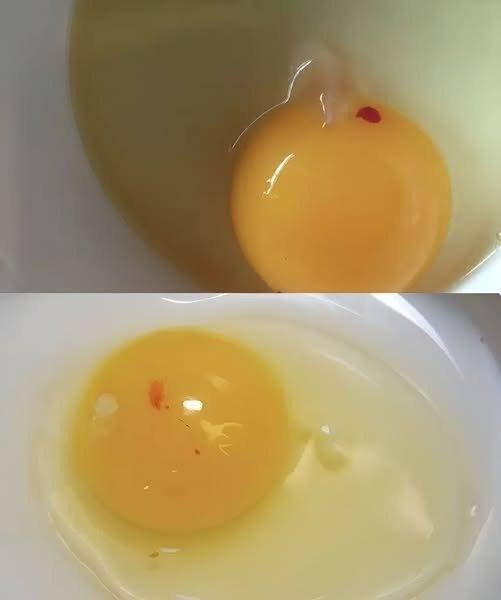
A red spot inside a raw egg can look alarming—but in most cases, it’s completely harmless. Here’s what it actually is and whether it’s safe to eat.
🥚 What Is the Red Spot?
The red or brownish spot you see in the egg white or attached to the yolk is usually a blood spot.
Why it happens:
- It forms when a tiny blood vessel in the hen’s ovary or oviduct ruptures during egg formation.
- It is not a sign that the egg is fertilized.
- It is more common in eggs from older hens.
- In large commercial operations (like those supplying brands such as Eggland’s Best), eggs are typically candled (inspected with bright light) to remove most eggs with visible spots—though some still slip through.
🧬 Is It a Baby Chick?
No. Even if the egg came from a farm with roosters:
- A small red spot is not an embryo.
- A fertilized egg looks very different (you would see clear development patterns after incubation).
- Store-bought eggs are almost never fertilized.
🍳 Is It Safe to Eat?
Yes—as long as the egg is fresh and properly stored, it is safe to eat.
You can:
- Cook it as-is.
- Remove the red spot with the tip of a knife or spoon if it bothers you.
The presence of a blood spot does not affect taste or safety.
⚠️ When Should You Throw the Egg Away?
Discard the egg if you notice:
- A bad or sulfur-like smell
- Pink, green, or iridescent egg whites (possible bacterial contamination)
- A cloudy or unusual texture combined with odor
🥚 What About Brown Spots?
Sometimes you may see small brown spots instead. These are usually:
- Meat spots (tiny bits of tissue from the hen)
- Also harmless and safe to eat
Bottom Line
A red spot in a raw egg is usually just a harmless blood spot. It may not look appealing, but it’s safe to eat if the egg is fresh.
If you’d like, I can also explain how to check egg freshness before cracking it.
