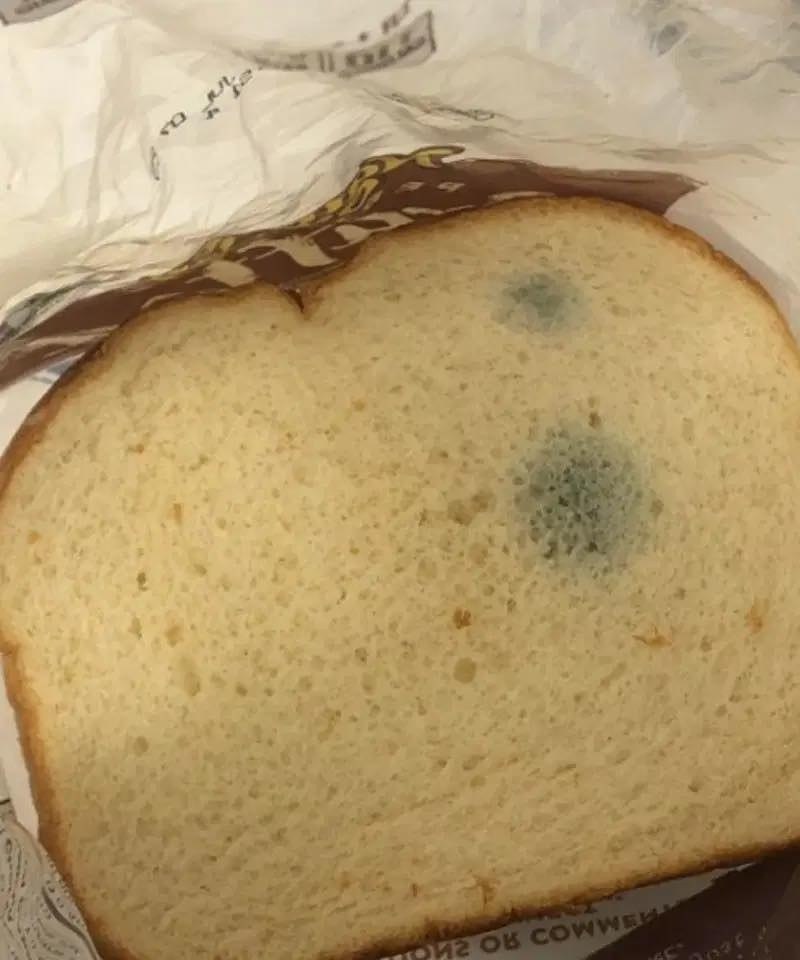
Here’s a clear guide to when stale bread is safe to eat — and when it’s time to toss it.
🥖 Stale vs. Spoiled: Know the Difference
Stale bread is dry and hard because moisture has evaporated or starches have crystallized.
Spoiled bread has mold or bacteria growing on it.
Stale = usually safe.
Moldy = not safe.
✅ When It’s Safe to Eat
You can still eat bread if:
- It’s just dry or hard
- There’s no visible mold
- It smells normal (just slightly “old”)
- It tastes fine
Stale bread can be revived or reused for:
- Toast
- Croutons
- Breadcrumbs
- French toast
- Bread pudding
🚫 When to Throw It Away
Discard bread immediately if you see:
1️⃣ Mold
Look for fuzzy spots in green, white, black, or gray.
Common bread mold includes species like Rhizopus stolonifer — which can spread invisible roots through the loaf.
⚠️ Important:
If you see mold on one slice, throw out the entire loaf. Mold roots can spread beyond visible spots.
2️⃣ Sour or Musty Smell
If it smells strange, damp, or fermented, don’t eat it.
3️⃣ Slimy Texture
Moist, sticky, or unusually soft patches can indicate bacterial growth.
4️⃣ Stored Too Long
Typical shelf life:
- Room temperature: 3–5 days
- Refrigerated: up to 7–10 days
- Frozen: up to 3 months
Homemade bread (without preservatives) spoils faster.
🧊 Storage Tips to Make Bread Last Longer
✔ Keep in a cool, dry place
✔ Seal tightly
✔ Freeze if you won’t finish it in a few days
✔ Avoid refrigerating unless your home is very humid (fridge can dry bread faster)
🧠 Quick Rule
If it’s dry → probably safe
If it’s fuzzy, smelly, or slimy → throw it out
If you tell me:
- Is it white, whole wheat, or homemade?
- What does it look and smell like?
- How long has it been sitting?
I can help you decide more precisely.
